New Research Spotlight
Oceanic worlds in South Asia: Entangled seascapes and counter-histories

We are pleased to highlight a new strand of research connected to the Nilgiri Archaeological Project that approaches South Asia’s oceanic worlds as entangled seascapes: relational assemblages shaped through long-term interactions between human communities, marine ecologies, and monsoonal temporalities.
Moving beyond land-centred and state-focused histories, the project explores how oceans and littorals operated as spaces from which counter-histories emerged between the early historical and early colonial periods. It brings together archaeological datasets, material assemblages, environmental and palaeoecological records, historical archives, and Traditional Ecological Knowledge to centre the experiences of marginal and mobile maritime actors (seafarers, fishers, pearl divers, islanders, and coastal foragers) whose histories have often been sidelined.
Crucially, the research also brings into focus the agency of non-human actors, including marine life and atmospheric forces, in shaping historical processes. Conceptually anchored in blue humanities, more-than-human theory, and decolonial archaeology, this work advances a new framework for interpreting South Asia’s pasts by treating the ocean not as a backdrop but as a historical actor in its own right.
This pilot project is funded by a BOF grant awarded to Daniela De Simone by Ghent University.
More info: Oceanic Worlds in South Asia: Entangled Seascapes and Counter-histories
28th ECSAS Conference in Heidelberg
1–4 October 2025
At the 28th European Conference on South Asian Studies in Heidelberg from 1 to 4 October 2025, Daniela and Letizia presented a joint paper titled:
Sensing the Landscape: Colonial Transformations of Smell- and Soundscapes in the Nilgiri Mountains, South India
The paper explored howcolonial interventions in the Nilgiri Mountains did not only reshape the region’s ecology and built environment, but also fundamentally altered its sensory worlds. Drawing on archaeological data, environmental history, and Indigenous knowledge, we examined how practices of forestry, plantation agriculture, and settlement reconfigured both olfactory and acoustic landscapes, silencing certain while amplifying others. By using smell and sound as analytical categories, the presentation contributes to emerging conversations in sensory history and more-than-human archaeology, challenging predominantly visual approaches to landscape and colonial transformation.
Udayakumar S. (NIAS, Bengaluru) at GCSAS as a Visiting Scholar
2 July–28 September 2024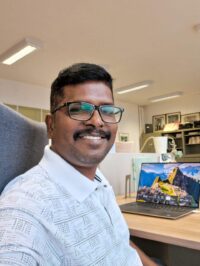
Dr. Udayakumar S., Assistant Professor at the National Institute of Advanced Studies and member of the Nilgiri Archaeological Project, is currently a Visiting Scholar at the Ghent Centre for South Asian Studies through a research stay fellowship funded by VLIR-UOS.
An ethnoarchaeologist working on Indigenous material culture production in the Nilgiri Mountains, at Ghent University Uday is working on the project Kota women’s technical knowledge of traditional pottery-making, with particular attention to ceramic production processes, while also receiving training in methodologies for petrographic analysis.
Welcome Uday!
More on memorial stones and animals: a conversation on dogs and South Indian hero-stones at the Department of History of Ashoka University, Delhi
17 April 2024
 On 17 April 2024 Letizia shared a bit more of her ongoing research on the memorialisation of animals in pre-modern India with students and researcher at the Department of History at Ashoka University, Sonipat, on the occasion of the Spring Seminar 2024.
In searching for clues about the biological and environmental aspects of the dog-human relation in South Asia, an often overlooked class of archaeological artefacts, the so-called hero-stones, appears as a source full of potential. While they directly testify to the key role of dogs in defence, hunting and warfare contexts, memorial stones may indirectly inform us on the extent of the bond between dogs and their human masters: carvings and inscriptions give a glimpse of the actual co-existence of the two species in the environment they shared, beyond any symbolical superstructure conveyed by literary and religious sources.
As a spin-off of the study of hero-stones on the Nilgiri Mountains of Tamil Nadu, the study of the representation of dogs and other non-human animals on the memorial stones of South India will contribute to a deeper understanding of the environmental and cultural configuration of this macro-region in the past.
Kota pottery techniques of the Nilgiris at the 8th International Congress of Society of South Asian Archaeology (SOSAA), Patna
4–7 April 2024
 Exploring ancient technology through an experimental archaeology and ethnographic perspective: Iron smelting process, Bone tool making process and Pottery techniques: in his most recent talk our colleague Udayakumar S. (NIAS, Bangalore) presented, among the rest, the traditional pottery-production techniques used by the Kotas of the Nilgiris at the 8th International Congress of Society of South Asian Archaeology (SOSAA) organised by the Bihar Museum, Patna, and the Directorate of Archaeology Department of Art, Culture & Youth, Government of Bihar from 4th to 7th April 2024.
The term experimental archaeology is a convenient way of describing the collection of facts, theories and fiction that have been assembled through a century of interest in the reconstruction and function of ancient remains. Udayakumar has taken three different techniques for his experimental study: iron smelting process, bone tool-making process and pottery-making techniques. All data presented is based on extensive ethnographic fieldworks and understanding of the artisans’ traditional knowledge.
With respect to the pottery production, the author has nailed all stages involved in the process (preparation of clay, hand-made pottery and wheel-made pottery, burnishing, pottery pre-heating, pottery firing) as observed in case studies from Central India and South India, including the Nilgiri Mountains of Tamil Nadu.
Udayakumar S brings the Kota pottery production of the Nilgiris to the 3rd International Conference in Commemoration of Padma Shri Awardee Iravatham Mahadevan, Chennai
5–9 January 2024.
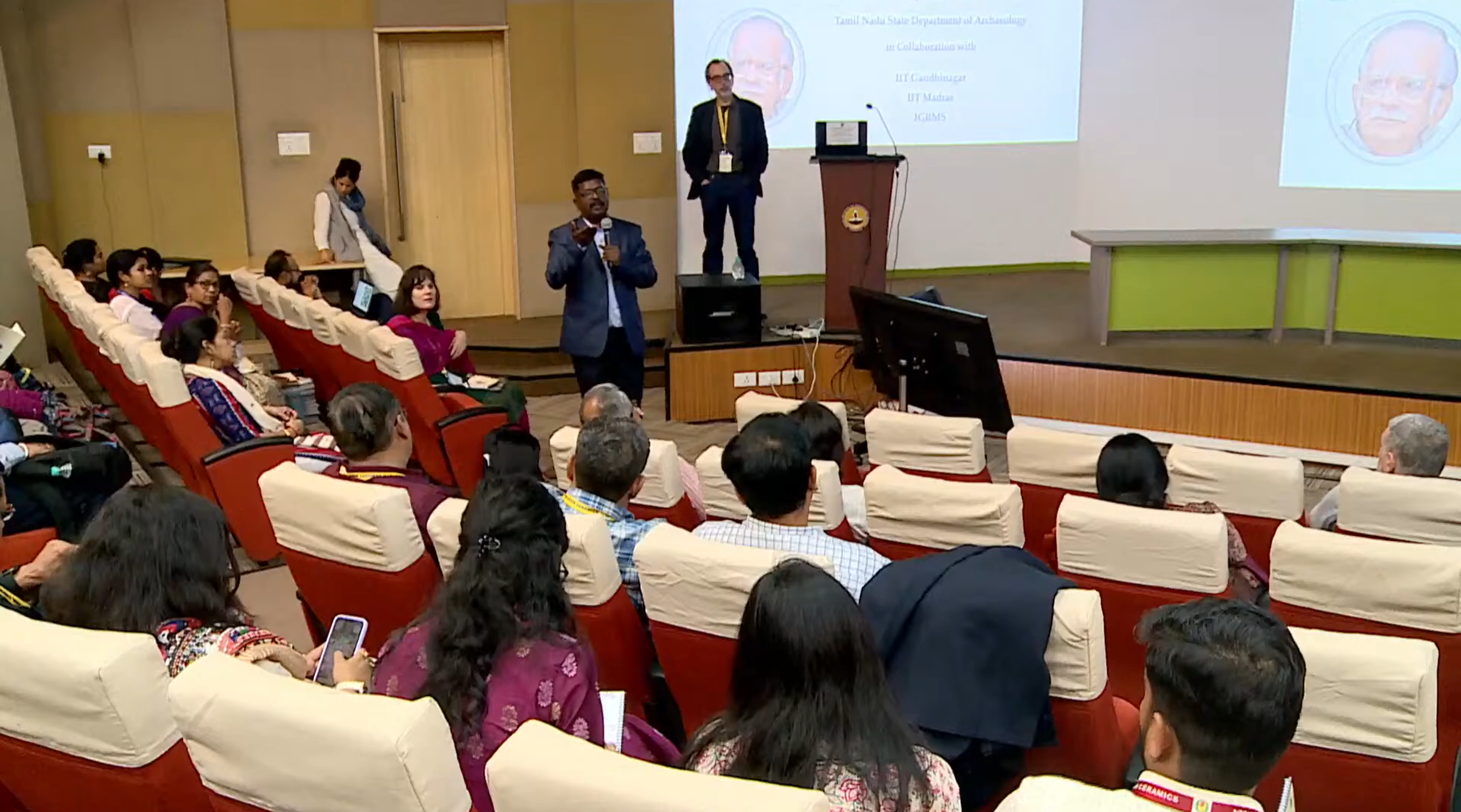 Our team member Udayakumar S from NIAS, Bangalore, participated in the 3rd International Conference in Commemoration of Padma Shri Awardee Iravatham Mahadevan dedicated to History, Science and Technology of South Asian Ceramics, which took place in Chennai between 5th and 9th January 2024.
With his contribution Experimental Archaeology and Ethnoarchaeology – Pottery Techniques Perspective, Udayakumar illustrated the latest results of his study on the Kota pottery tradition conducted in 2023 in the frame of the Nilgiri Archaeological Project.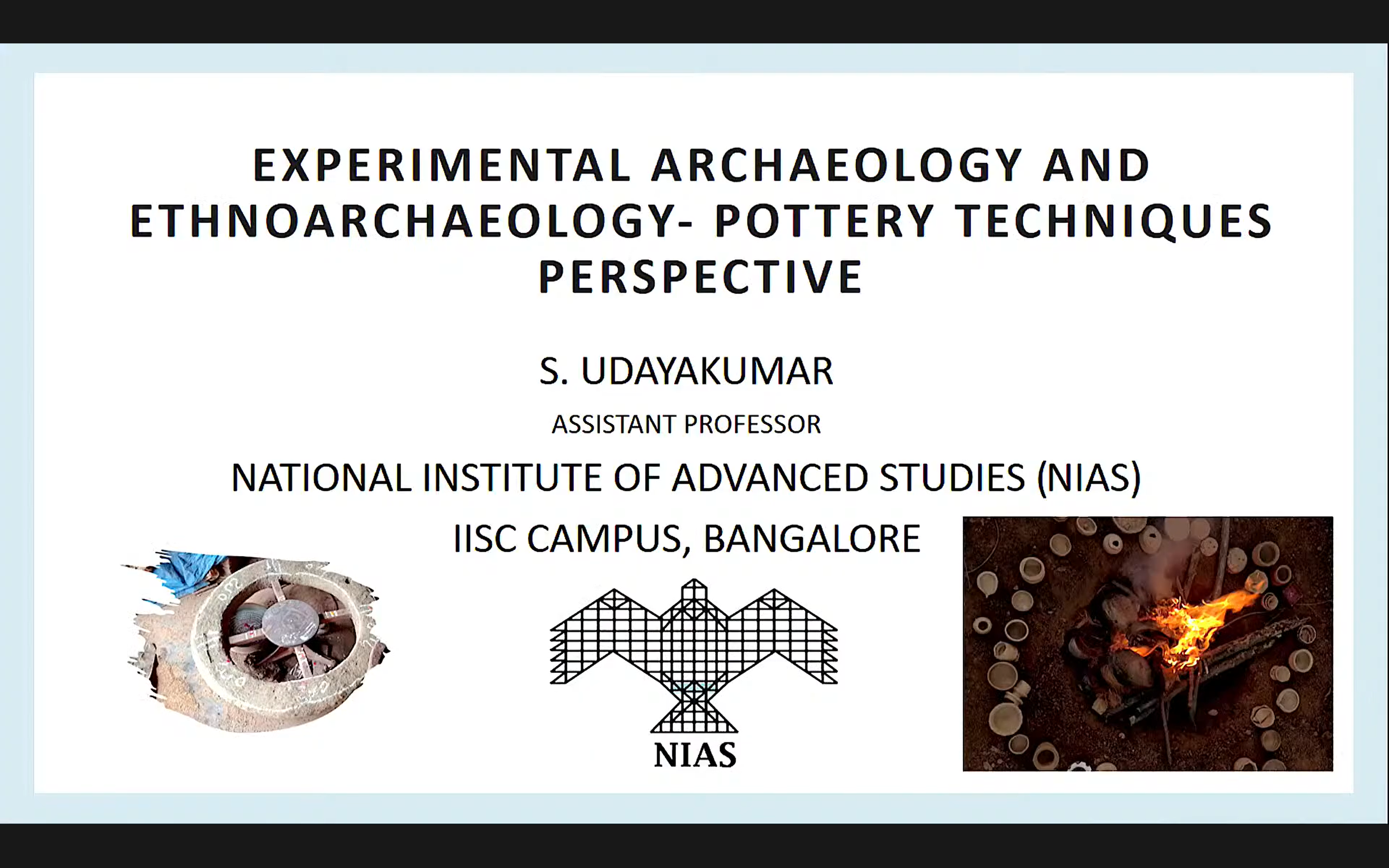
The Kotas are one of the several ethnic groups traditionally inhabiting the Nilgiri Mountains of Tamil Nadu, and nowadays their community is concentrated in just seven villages. They are well known in the region as pottery makers. Their special techniques were transmitted from generation to generation, but they are increasingly endangered due to the fast-paced changes of the local economy and social structure.
Apart from illustrating local pottery making techniques and firing methods, Udayakumar correlated them to those of neighbouring regions, thus highlighting the occurrence of interregional exchanges.
Presentation at the 27th ECSAS Conference in Turin
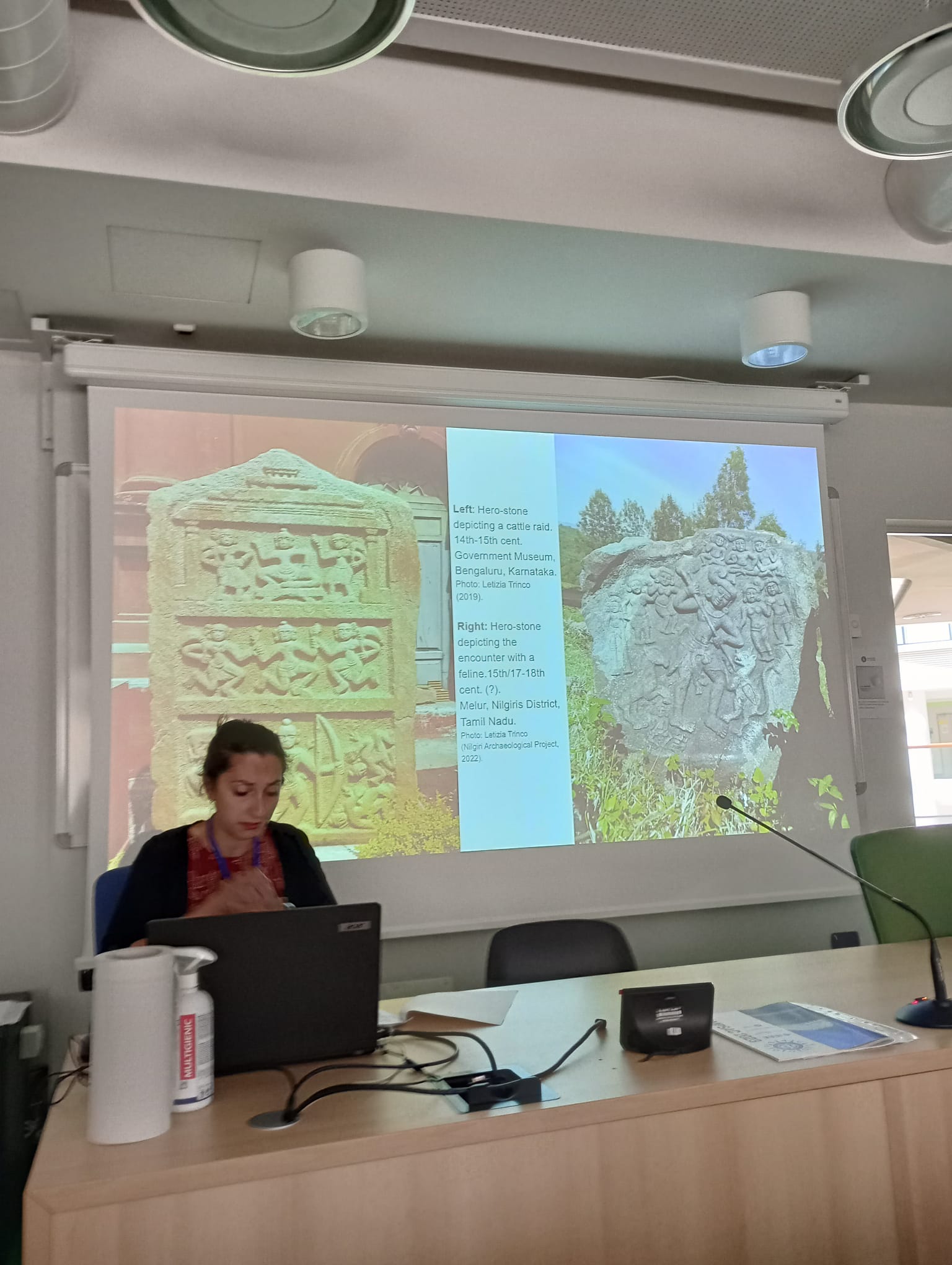
 Letizia Trinco presented at the 27th European Conference on South Asian Studies (ECSAS) which took place in Turin from 26th to 29th July 2023.
Her talk titled “Perspectives on the dog-human interaction in ancient India between funerary evidence and non-Sanskrit sources” contributed to the panel More than human: Animal-Human Relations in Pre-Modern South Asia.
The presentation focused on hero-stones and the memorialisation of non-human animals. Hero-stones are a conspicuous part of the archaeological heritage of the Nilgiris. Like in many other regions of India, these memorials were erected to commemorate the death of people who passed away in circumstances perceived by the community as exceptional. Sometimes hero-stones do not just commemorate people, but also their faithful non-human companions: this is the case of some hero-stones between Tamil Nadu and Karnataka dedicated to dogs, a further proof of the millennium-old biological connection between the human species and the domesticated species par excellence, which turned into a socio-emotional bond. While a wealth of archaeological data from all over the world testify to the various forms of this interspecies interaction, India – and above all the lowland regions around the Nilgiris – offers some unique evidence from the Medieval period.
Workshop Global Outlands at the Östasiatiska Museet in Stockholm
 The two-day workshop Global Outlands was co-organised by Uppsala University, the Upplandsmuseet, and the Östasiatiska Museet in Stockholm on 24th and 25th May 2023. The project Global Outlands based at Uppsala University aims to generate new knowledge regarding what role the large-scale resource exploitation of non-agrarian resources played in societal development in the prehistoric and historic periods. The purpose of the workshop Global Outlands was to bring together international researchers with an interest in questions concerning the exploitation of non-agricultural lands, and products, and how these lands were integrated in networks of production and exchange.
Daniela De Simone was invited to introduce the Nilgiri Archaeological Project and present on our research on the key role that Indian forest-dwellers played for centuries in the Indian Ocean trade as the primary suppliers of forest products.
Poster presentation at the Young Researchers Overseas Day of the Royal Academy for Overseas (RAOS)
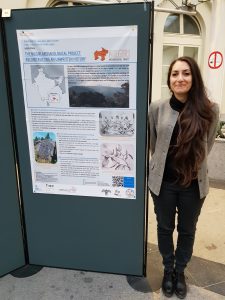 On 12th December 2022, Letizia Trinco participated in the Fifth Edition of the Young Researchers Overseas Day organised by the Royal Academy for Overseas Sciences (RAOS) at the Palace of the Academies in Brussels.
With her poster presentation, she illustrated the scopes of the Nilgiri Archaeological Project, highlighting her contribution to it between archaeological surveys, the investigation of museum collections and the study of botanical treatises predating the British colonial period.
The Nilgiri Archaeological Project at the 2022 IMC in Innsbruck
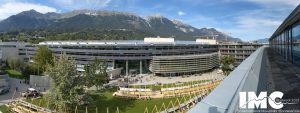 From 11th to 15th September 2022 Daniela and Letizia attended the 2022 International Mountain Conference (IMC) which took place amidst the scenic Alpine settings of Innsbruck, Austria.
The IMC is the broadest world conference on mountain research and favours a multidisciplinary approach to the study of mountain systems around the world by bringing together ecology, climatology, history, economics, social sciences, cultural studies etc.
Our work on the Nilgiri Mountains contributed to the session “Social strategies and rituality in ancient mountain landscape” with the following presentations:
- Daniela De Simone, The Megalithic Tombs of the Nilgiri Mountains of South India as Ritual Community Monuments
- Letizia Trinco, Sacred groves and dolmens: some aspects of the ritual landscape of the Kurumba and Badaga communities of the Nilgiri Mountains of South India
Long life to mountain systems!
UGent and IFP teams talk about the Nilgiris at the 25th EASAA Conference in Barcelona

Daniela De Simone, Letizia Trinco, together with Anupama Krishnamurti and Prasad Srinivasan, our research partners at the French Institute of Pondicherry (IFP), presented at the 25th Conference of the European Association for South Asian Art and Archaeology (EASAA) hosted in Barcelona, Spain, from 4th to 8th July 2022.
In our talks, we explored the environmental and historical identity of the Nilgiris from different angles:
- Anupama K, Prasad S: Pollen-based landscape reconstruction of Nilgiris, South India: some paleoecological and archaeological perspectives
- Daniela De Simone: An Unwritten Past: An Outline of the Long-term history of the Toda Community of the Nilgiri Mountains
- Letizia Trinco: Whose satīs? Reflections on the so-called “satī-stones” of the Nilgiri Mountains of Tamil Nadu: from old (un)certainties to new perspectives
Looking forward to bringing our newest results to the 2024 EASAA edition!
Documenting the Mantegazza collection in Florence
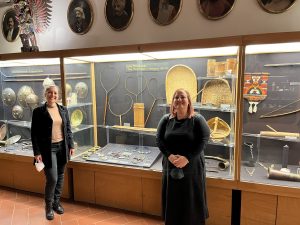 In April and September 2022, Daniela and Letizia spent some days at the Museum of Anthropology and Ethnology of the University of Florence to document a collection of Nilgiri artefacts gathered in 1882 by Paolo Mantegazza, an Italian physician and anthropologist. The Mantegazza collection includes over 80 ritual objects, ornaments, and tools and is the largest collection of Toda artefacts outside India. In his Studii sulla Etnologia dell’India (1886), Mantegazza carried out a study of the indigenous communities of the Nilgiris based on his fieldwork in India in the early 1880s. Mantegazza was a contemporary of Charles Darwin with whom he held an intense epistolary correspondence.
Daniela De Simone interviewed by The Federal
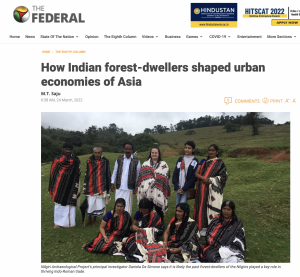 Our PI, Daniela De Simone, gives an interview to M.T. Saju for The Federal on the aims and objectives of the Nilgiri Archaeological Project and why she fell in love with the people and the environment of the Nilgiri Mountains.
Daniela De Simone’s article is published in Asian Perspectives
 The article “Grave Goods from Megalithic Burials in the Upland Forests of the Nilgiri Mountains, South India: Analysis and Chronology” by our PI, Daniela De Simone, has been published in Asian Perspectives.
The article examines the grave goods excavated in the nineteenth century from megalithic burials on the tops and ridges of the Nilgiri Mountains in southern India, an area of montane subtropical forests. This analysis is based on the study of the collection of Nilgiri grave goods held at the British Museum combined with a preliminary survey around the Nilgiri towns of Udhagamandalam and Kotagiri in Tamil Nadu that was carried out in November and December 2018. The article presents a stylistic and typological study of the Nilgiri grave goods based on a comparative analysis with analogous artefacts excavated at other South Asian sites and proposes an improved chronology for these materials.
You can find a list of our team’s publications here.
Daniela De Simone gives talk at the Central University of Karnataka
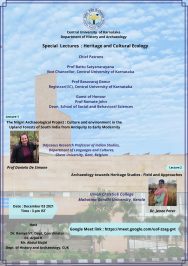 On Friday, 3rd December 2021 Daniela De Simone, our PI, gave a talk on the Nilgiri Archaeological Project to the faculty members and students of the Department of History of the Central University of Karnataka. She presented the project for the first time since its beginning in September 2021 and illustrated the work carried out so far on the archaeology of the Nilgiri Mountains by her and our postdoc, Letizia Trinco. While we wait to return to the ‘Blue Mountains’, we look forward to introduce the Nilgiri Archaeological Project to our colleagues in India and around the world at other online events planned in early 2022.