Project Workshop
WHAT WE’VE LEARNED & WHAT’S NEXT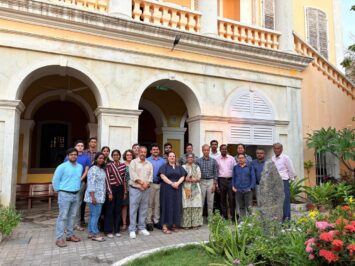
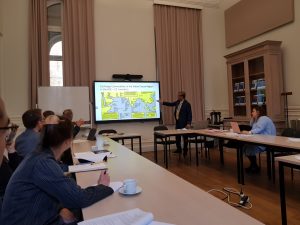
On 10 and 11 April 2025, the French Institute of Pondicherry (IFP) hosted a milestone event for the Nilgiri Archaeological Project: a two-day meeting titled What We’ve Learned & What’s Next. This gathering marked a key moment in the life of the project, bringing together team members and research partners from across India to reflect on the project’s progress and to collectively plan the next stages of research. The meeting offered a rare opportunity for all collaborators (across disciplines and institutions) to meet in person, share updates, and exchange perspectives.
Over the two days, discussions centred on fieldwork outcomes, methodological approaches, data integration, and emerging findings from the project’s diverse research strands: archaeology, archaeometry and ethnoarchaeology, palaeoecology, textual analyses, ethnohistory, and historical botany and traditional ecological knowledge. A key focus was also placed on strategies for presenting and publishing the project’s findings, including collaborative outputs that reflect the interdisciplinary and multi-vocal nature of the research.
Beyond the intellectual richness of the discussions, the meeting reinforced the Nilgiri Archaeological Project’s commitment to ethical and interdisciplinary research. Plans were made for collaborative publications, a digital platform to share data and findings, and further integration across teams working in the field, laboratories, archives, and communities.
As the project enters its next phase, this meeting laid a strong foundation for deepening our understanding of the Nilgiris’ upland histories and more-than-human landscapes.
PROGRAMME
WELCOME ADDRESS
Renaud Colson, Director, French Institute of Pondicherry
INTRODUCTION
The Nilgiri Archaeological Project Daniela De Simone (Ghent University)
ARCHAEOLOGY
Archaeological Survey: Preliminary Results and Next Steps Arjun Rao (Central University of Karnataka, Kalaburagi) and Daniela De Simone (Ghent University)
Hero-stones and Other Non-burial Funerary Monuments Letizia Trinco (Ghent University)
Remote Sensing and Environmental Change: Methodology for Landscape Reconstruction Enzo Cocca (Ghent University)
ARCHAEOMETRY & ETHNOARCHAEOLOGY
Archaeometric Study of Museum Collections: Preliminary Results and Next Steps Sharada Srinivasan (National Institute of Advanced Studies, Bengaluru)
Kota Women Pottery Making Traditions: An Ethnoarchaeological Approach S. Udayakumar (National Institute of Advanced Studies, Bengaluru) and C. Gomathi (Bharathiar University, Coimbatore)
PALAEOECOLOGY
Pollen Analyses from Three Dated Cores (Taranadu Mandu, Muthanadu Mandu, Town Vayal) K. Anupama and S. Prasad (French Institute of Pondicherry)
Phytolith Studies, Preliminary Results, and Next Steps R. Gayathri, Vivek Pandi (Manipal University), and Doris Barboni (French Institute of Pondicherry)
Analytical Approaches and Findings within the NILGIRI Archaeological Project Ramya Bala Prabhakaran (National Institute of Advanced Studies, Bengaluru)
Modern Surface Samples, Landcover and Landuse Maps, and Present Vegetation Studies J. Lazar and M. Anbarashan (French Institute of Pondicherry)
Pollen Collection from Honeycombs: Preliminary Results J. Lazar (French Institute of Pondicherry)
Fungal Spores in Palaeoecology: The Challenge of the Nilgiri Archaeological Project M.B. Govinda Rajulu and T.S. Suryanarayanan (Vivekananda Institute of Tropical Mycology, Chennai)
DNA and SedADNA Analysis: Issues and Opportunities for the Nilgiri Archaeological Project G. Kumaresan (Madurai Kamaraj University)
Sedimentary Geochemistry and Isotope Studies: First Results and Future Prospects Pramod Singh and Ronald Terieng (Pondicherry University)
TEXTUAL SOURCES
Textual Sources and the Otherness of Forest-dwellers Ananya Vajpeyi (Centre for the Study of Developing Societies, New Delhi/Ashoka University)
Mountain and Forest People in Tamil Literature V. Prakash (University of Texas, Austin/French Institute of Pondicherry)
ETHNOHISTORY
Indigenous Oral Histories and the Reconstruction of the Past N. Ramesh (University of Hyderabad) and Daniela De Simone (Ghent University)
HISTORICAL BOTANY AND TRADITIONAL ECOLOGICAL KNOWLEDGE
Plants, People and the Past Daniela De Simone (Ghent University)
Research Assistants and Students: introductions
Nithya Basith (Madras Christian College)
Melvin Chowdury (Ghent University)
Divyendu Kashyap (French Institute of Pondicherry/Ghent University) Kunjunni Sajeev French Institute of Pondicherry/Ghent University)
International Symposium
NARRATIVES OF EXCLUSION: THE OTHERING OF FOREST-DWELLERS IN PRE-MODERN INDIAN TEXTS
 Ghent University, 17-18 June 2024
This symposium aims to explore the multifaceted portrayals of Indian forest-dwellers in pre-modern textual sources, shedding light on the complex dynamics of “othering” and its implications for understanding historical interactions between sedentary civilisations and indigenous forest communities. Drawing upon a wide array of pre-colonial texts, including religious scriptures, epic narratives, and regional historical documents, we will delve into the narratives and characterisations that have historically marginalised forest-dwellers, casting them as the “Other.”
We will critically analyse how these texts construct the identies of forest- dwellers, often depicting them as peripheral or antithetical to the societal norms of mainstream agrarian cultures. Through examining the themes of wilderness versus civilisation, purity versus pollution, and order versus chaos, we will gain insights into the underlying ideologies that fuelled such representations. Furthermore, we will discuss the implications of these textual portrayals for the social hierarchy, cultural assimilation, and conflict between forest communities and expanding agrarian societies. The objective of the workshop is to challenge entrenched narratives, advocating for a more inclusive historiography that acknowledges the diverse experiences and contributions of India’s forest communities.
PROGRAMME
Introduction
Daniela De Simone (Ghent University) and Ananya Vajpeyi (Centre for the Study of Developing Societies, New Delhi), The Nilgiri Archaeological Project and the pre-modern history of forest- dwellers
Keynote lecture
Brian Black (Lancaster University), Nāgas in the jātakas and Mahābhārata: Narratives of exclusion and inclusion
Forest-dwelling Communities
Eva De Clercq (Ghent University) The forest and forest dwellers in the Jain Rāmāyaṇas
Rosina Pastore (Ghent University) The othering of forest-dwellers in the Rāmcaritmānas
V. Prakash (French Institute of Pondicherry) The Caṅkam people and their landscape: The exchanges of the forest and mountain dwellers with different eco-landscapes
Lidia Wojtczak (SOAS) “Robber bands defined ethnically,” Bhils in South Asian literature
Saarthak Singh (Ghent University) and Ayesha Sheth (University of Pennsylvania)
Views of and from the margins: Gonds and Gondwana in military and music texts, 15th-16th centuries
Ewa Debicka-Borek (Jagiellonian University, Krakow) The Chenchus in the Vāsantikāpariṇayam
Forests, Forest-dwellers and Kingship
Ananya Vajpeyi (Centre for the Study of Developing Society, New Delhi) Mainstream and margin in the making of the Maratha polity: Who was Shivaji?
Dániel Balogh (Humboldt University, Berlin) Images of chaos and stability in Eastern Cālukya grants
Samana Gururaja (Humboldt University, Berlin) and Daniela De Simone (Ghent University)
Forging identity in the uplands: The Hoysaḷas as “Lord among hill-chiefs” in medieval South India
Wilderness and Medical Knowledge
Annalisa Bocchetti (Ghent University) Monsters or healers? The representation of forest inhabitants in the Sufi premakathās
Vitus Angermeier (University of Vienna) Doctors between civilisation and wilderness: medical geography in pre-modern South Asia
Discussants
Sunil Gupta (Max Planck Institute for the History of Science, Berlin)
Sara Mondini (Ghent University)
Letizia Trinco (Ghent University)
Research Seminar
Encounters in the Forests: Representations of Forest-dwellers in the Indian Epics led by Ananya Vajpeyi, Centre for the Study of Developing Societies, New Delhi
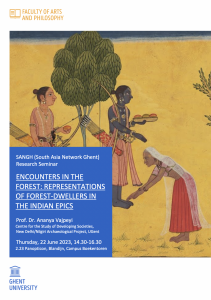 Ananya Vajpeyi
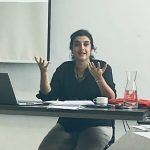 , who has recently joined the Nilgiri Archaeological Project as a research consultant to investigate how forest-dwellers, “tribals” and other marginal groups have been represented in Sanskrit literature, spent the month of June 2023 at UGent as Visiting Professor.
On 22nd June, Ananya led the research seminar Encounters in the Forests: Representations of Forest-dwellers in the Indian Epics for the members of our research group SANGH (South Asia Network Ghent). The seminar focused on two well-known representations of forest-dwellers from the epics, Ekalavya, a Niṣāda prince, from the Mahābhārata, and Śabarī, an aged female ascetic, from the Rāmāyaṇa.
From Vyāsa’s Mahābhārata, we read the episode of Ekalavya’s unhappy encounter with Guru Droṇācārya, the teacher in charge of training the Kaurava and Pāṇḍava princes to be excellent kṣatriya warriors. We also read the story of Śabarī from the Rāmcaritmānas by Tulasidas, as he is the one to give prominence to the story of her encounter with Rāma. (She plays a relatively minor role in the Valmīki Rāmāyaṇa).
The seminar represents the official start of our work on the construction of the otherness of forest-dwellers in Indian textual sources.
International Symposium
The Nilgiri Archaeological Project hosted the international workshop Of Exotic Plants, Wild Beasts and Precious Gems: South Asian Forest-dwellers and the Making of World Civilisation (Late Neolithic to Early Colonial Period)
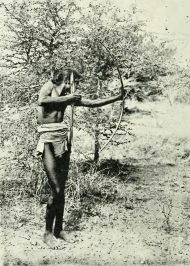
On 26th October 2022, Daniela De Simone and Sunil Gupta hosted the international symposium Of Exotic Plants, Wild Beasts and Precious Gems: South Asian Forest-dwellers and the Making of World Civilisation (Late Neolithic to Early Colonial Period). Dr. Sunil Gupta (Indian Archaeological Society) is currently Visiting Scholar in the Department of Languages and Cultures at Ghent University where he contributes to the scientific activities of the research group SANGH (South Asian Network Ghent).
The earliest evidence of exchange of South Asian forest products outside the region dates to the Neolithic period. Forest products include plant materials and animal by-products, such as spices and ivory, as well as gemstones, metals and timber. In the early centuries CE, with the growing demand for forest products in Indian cities and the intensification of the Indian Ocean trade that lived off the commerce of those products, South Asian forest-dwellers increasingly used their ecological knowledge, particularly in terms of spatial distribution and seasonal availability, to become the primary suppliers of internal and external markets thus connecting themselves to short- and long-distance exchange networks. However, in the early 19th century, the British colonial enterprise started to “legally” appropriate forested land from indigenous owners, relegating South Asian forest-dwellers to a subaltern role in the global economy of the following centuries.
The Indian Ocean trade, as well as the coastal polities and European colonies that thrived on the commerce of forest products, would have not existed without the active engagement of South Asian forest communities. The aim of this workshop is to understand the key role that South Asian forest-dwellers played over the long-term, not only within the urban economies of the region, but in the making of world civilisation given that the forest products they gathered and supplied were extensively used to, for example, concoct medicine, prepare food, create artworks, craft luxury items, and build ships.
PROGRAMME
- Daniela De Simone, Ghent University and Sunil Gupta, Indian Archaeological Society
Of Exotic Plants, Wild Beasts and Precious Gems: Introduction - Sunil Gupta, Indian Archaeological Society
Late Prehistoric to the Early Historic: forest dwellers of the Indian subcontinent in early Indian Ocean exchange networks (5th-4th millennium BCE–early 1st millennium CE) - Katrien De Graef and Mirko Surdi, Ghent University
“Black Land, may your trees be great trees!” New approaches to the wood and vegetable goods trade from Meluhha to Mesopotamia in the late third and early second millennium BCE - Irene Salvo, University of Exeter
Ingredients from India in ancient Greek and Roman magic - Matthew Cobb, University of Wales Trinity Saint David
The hill and forest products of the Tamilakam: communication and exchange between southern India and the Roman world - Ariane de Saxcé, German Archaeological Institute, Bonn
The export of South Asian forest products during Early Historic times - Eva Myrdal, National Museum of World Culture, Stockholm
Iron, wild cinnamon and honey in Sri Lanka: what is needed to write the history of the people engaged in extraction and production? - Daniela De Simone and Letizia Trinco, Ghent University
Jain merchants, forest temples, and the spice trade in medieval Kerala - Sara Mondini, University of Venice “Ca’ Foscari”
Muslim trades on the Malabar coast - Michael Willis, Royal Asiatic Society and Saarthak Singh, New York University
What’s for dinner? Does the “Ni’matnāmah Naṣir al-Dīn Shāhī” provide data about foods and other products from the highlands? - Alessandro Ghidoni, University of Exeter
Timber and fibre: South Asian materials in western Indian Ocean watercraft - Erik Odegard, International Institute of Social History, Amsterdam
European shipbuilding with Indian teak, the case of Cochin